Fuzzy Winter Fox Hat for Kids Ages 4 to 10 – Sewing & Embroidery Pattern

I designed a couple of fleece animals hats for my kids last year. In the time since then, we have gotten stopped by strangers every time we go out to a store. Everyone loves these hats! They can be a bit work intensive, particularly the embroidery for the eyes and nose, but the finished product is absolutely worth it.

This fox hat pattern was designed for my 8 year old, whose head is 21.5″ around. Thanks to the flexible stretch of the fleece, this finished hat will fit kids from about age 4 through age 10. After age 10, the hat can still be worn, but it starts to get a bit snug and/or short.

Hat Sewing Instructions

Step 1: Cut the fleece pieces out

Click here to download the hat pattern. It will download as a 4-page PDF. Go ahead and cut out the pattern pieces. You’ll need to tape together the brim pattern pieces (the long, skinny piece).

I usually like to use no-pill fleece for my hats, although with this particular one I chose a more furry-feeling reddish-brown fleece. I stuck with normal no-pilling fleece for the black and white pieces, though.

From brownish-red felt: Cut 2 front pieces, 2 back pieces, 4 ear flaps, and 4 outer fox ears. Make sure the fox’s ears are cut as 2 mirrored pairs.

From white felt: Cut 2 inner fox ears, making sure they are mirrored. Also cut 1 face piece on the fold.

From black felt: Cut 2 brim pieces on a fold, 2 eyes, and 1 nose. make sure the eyes are a mirrored pair.


Step 2: Sew the face and ear pieces

Put white thread into your sewing machine.

Position and pin the white face to the main front piece, such that there is 1″ between the white outer eye points and the edge of the main brown piece. There should also be 1″ between the bottom of the white face and the bottom of the main brown piece. (See the picture.)


Sew around the edges of the white face with a zigzag stitch, using white thread. I used a width of 5 and a stitch length of 3.

Sew the white inner ears to the fronts of the outer ears with the same zigzag stitch. (See picture.)


Step 3: Sew the eye and nose pieces

Switch your thread color to black in the sewing machine.

Position and pin the black eye pieces onto the white face. Sew around the edges with a zigzag stitch, using black thread. I use a width of 5 and length 3 for most of the eye, but I narrow the width to a 3 at the outer points to help them taper nicely. (See picture.)

Step 5: Position the black nose onto the face and sew it into place with zigzag stitch.


Step 4: Hand embroider the facial features

Transfer the embroidery pattern to the fox face using your preferred method. I like to use water-soluble stabilizer. I use an ultra-washable Crayola marker to draw the pattern onto the stabilizer. Then I pin the stabilizer to the hat for stitching.

I embroider the face as follows:

Nostrils: First do a vertical satin stitch with light grey embroidery floss, 4 strands. Then underline the nostrils with split stitch, using 2 strands of white.

Nose detail: The long white line curving across the top of the nose, and the white line that goes vertically between the nostrils: Do both of these with 2 strands of white floss in split stitch.

Eyes – white sections: Sew the white highlights in the eyes and the white edges around the iris. Do both of these with 4 strands of white floss in satin stitch.

Eyes – iris: Use 2 strands of greenish-yellow floss and 1 strand of orange-brown floss. Stitch the iris with satin stitch. Your stitches should radiate out from the center, as shown in the picture below.

Under-eye outline: With 2 strands of black, sew a split stitch along the line just below both eyes.

Mouth: Sew the mouth with 4 strands of black in split stitch.

Tongue: With 4 strands of pink or red floss, sew the tongue with satin stitch.

When the embroidery is finished, dissolve the water-soluble stabilizer if you used any. Let the piece air dry overnight. Don’t try to put it into a dryer, because you risk the fleece edges coming apart.

Step 5: Sew the fox ears and the ear flaps

With right sides together, sew the fox ear fronts and backs together along the tops and sides with 1/4″ seam. Leave the bottom edge open. (Fox ears are the ones in the top of the picture.)

Also sew the ear flap fronts and backs together with right sides together, leaving the flat top edge open. (The ear flaps are the ones in the bottom of the picture.)

Turn everything right side out.


Step 6: Sew the outer pieces together

With right sides together, sew the outer front piece and outer back piece together along the sides and top with a 1/4″ seam. Leave the ear edges open, and leave the bottom open. I marked the edges you should sew with green in the picture.

(Warning: Make sure you’re sewing a BACK piece to your front embroidered piece. I once accidentally sewed the front liner to the front embroidered piece, and the subsequent seam ripping I had to do was the pits.)

Next, insert the fox ears inside the outer hat so that the ear fronts and the embroidered face are facing each other. Make sure the left ear and right ear are on the correct sides, so they point out and away from each other. See the pink arrows in the picture for guidance.


Once the ears are inserted, their bottom edges should stick out about 1/4″ past the hat’s opening. Sew in place 1/2″ from the edge of the ears (which is 1/4″ from the edge of the hat opening). You may need a long stitch length due to the number of layers for this stitching. I use length 4.

Confirm the stitching caught all layers and that no restitching is needed. Once that is confirmed, trim the excess seam from the ear bottoms. It should look like this after trimming.

Turn the outer hat right side out.


Step 7: Piece together the hat liner

With their right sides together, sew the front liner to the back liner. IMPORTANT: This time, you are sewing different edges than you did with the outer pieces! Only sew the sides and the ear edges together. Leave the top of the head open, and leave the bottom edge open. I’ve marked the edges to sew with green in the picture.


Step 8: Piece together the brim and ear flaps

With right sides together, pin the brim to the brim liner along their bottom edge. Insert the ear flaps between the brim and liner, as shown in the picture. Use the notches to line up the ear flaps where they belong. The ear flaps should be positioned so that they stick out 1/4″ past the edge of the brim seam.

Sew everything together along the brim bottom edge, as shown in the picture above. Use a wide zigzag stitch, so the brim keeps its stretchiness. I used a zigzag with width 3, length 4.

Step 9: Sew the brim into a circle

Next, open the seam you just stitched, so that the brim and brim liner are separated and lying flat. Fold the whole thing in half lengthwise, bringing together the short ends with right sides facing. Sew the ends together 1/4″ from the edge with a straight stitch, as shown in the picture here.


Step 10: Attach the brim to the hat

With right sides together, pin the brim to the bottom edge of the outer hat, lining up notches and seams. The brim seam from step 9 should line up with the hat’s back center notch. Sew all the way around with a zigzag stitch 1/4″ from the edge. I used zigzag width 3, length 4.

At this point, the hat should look like this with the brim unfolded all the way down:

Step 11: Attach the liner to the hat

With the hat liner inside out, pull the liner over the outer hat and line up the brim edge with the liner’s bottom edge. The hat and its liner should be right sides together.

You can pull the hat’s ears up through the hole in the top of the liner to help the fabric lay flat. (See picture.) Pin the brim to the liner, lining up notches and seams.

Sew around the hat with a zigzag stitch 1/4″ from edge, attaching the brim to the liner. I used zigzag width 3, length 4.


Step 12: Close up the liner

Pull the hat completely right side out. Push and pull on corners to help the seams flatten out. It will look like this.


Now double check that there are NO MORE PINS hiding in the fabric!! Once the coast is clear, fold the edges of the liner opening under 1/4″ and sew together as close to the edge as possible. Give a light tug after sewing to make sure the liner is completely closed and that no little holes remain.


Step 13: Finishing touches

Push the liner up inside the hat. At this point, you can call the project finished and get on with life, or you can do the final step that I like to do to secure the liner inside the hat.

With a regular sharps needle and black thread, I throw a couple hidden stitches right on top of the brim seam at the front center and back center.

Phew, you did it! I think my favorite part of this hat sewing pattern is how easy it is to tweak it into just about any animal. Simply change the eye, nose, and ear shapes, and use a different color felt. I’ve made a few birthday presents for local friends’ kids, where I even tailored the hat to look like their pet cat or dog. So much fun!

Even our family dog approves of the fox hat!

Tooth Fairy Pillow Sewing Pattern — Includes Embroidery Pattern with Optional Appliqué

embroidered tooth fairy pillow sewing pattern

Oof! I can’t believe it’s been so long since my last post. I got sucked into the whirlwind of Halloween costume making, then planning an outdoor craft-themed birthday party for my 7-year-old, right into Thanksgiving meal planning, followed by the inevitable insanity of making gifts in time for Christmas day. Then in January, we got caught up in some unexpected house construction. Not the fun kind.

So, long story short, it feels like I blinked and rode a rollercoaster straight from September into February. And while the bad news is that all that craziness stopped me from blogging, the GOOD news is that I’ve been keeping track of my crafts and creations over the past 5 months. In other words, I’ve got some GREAT projects all photographed and lined up to share — I just need a little time to get them typed up. It will happen!

In the meantime, I’m gonna share some oldie-but-goodie projects that I used to sell. Since they haven’t been available on the Etsy store for a couple years, I’ve decided to go ahead and throw them up here for general public consumption. First out of the gate is this fabulous tooth fairy pillow with a tiny pocket that I’ve made for my own kids as well as for other friends and family members as gifts. There are two versions of the pillow — one with appliqué for the fairy dress and one with only embroidery. Both versions are available in the same download along with embroidery instructions and thread instructions. And, of course, instruction videos for all the embroidery stitches in this project are available on my website in the “Embroidery Tutorials” section.

Click here to download the 12-page PDF, which includes the printable embroidery and appliqué patterns, as well as in-depth sewing instructions with color pictures.

To personalize the pillow with the name of your choice, you can also check out my tutorial on how to easily create your own embroidery lettering pattern with any word processor.

Did You Try Out This Tooth Fairy Embroidery Design?

If you make this pillow, let me know in the comments below how it turned out! And give me a shout in the comments if you have any questions about my pattern. Have fun stitching!

Amazing Heart – Baby Onesie Embroidery Pattern

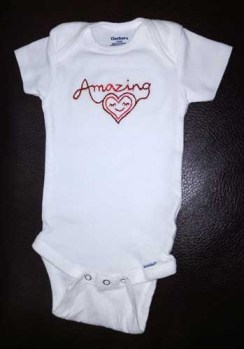
amazing baby onesie

Keeping with the theme of my previous post, I’ve been sketching up and stitching more quick weekend project patterns to embroider onto baby onesies. I like this one, because it can be whipped out extremely quickly without having to switch between colors (a tough thing to accomplish when there’s a baby on me while I’m stitching!)

Click here to download a PDF of the “Amazing Heart” embroidery pattern.

Or click here to download the pattern as a mirror image.


Tips & Tricks for Embroidering “Amazing Heart” onto a Onesie

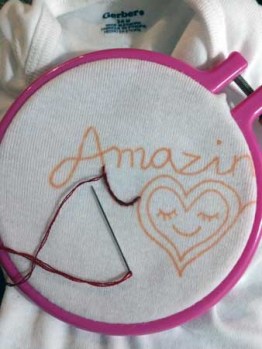
stem stitching

Once again, I opted to stitch this entire pattern in stem stitch, in part because I simply love this easy stitch, and in part because the stem stitch leaves less thread on the backside of the fabric. This is important when you want to avoid thread chafing against your baby’s skin!

I also used two layers of fusible interfacing on the back of the fabric. I ironed the first layer onto the onesie BEFORE I began to stitch. This helps to keep the fabric from stretching out of shape while I work with the thread.

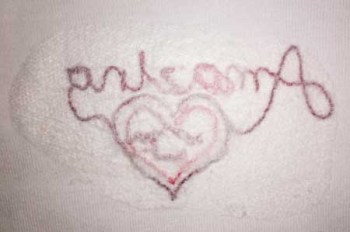
Next, I ironed a second layer of interfacing onto the onesie AFTER I finished stitching. This holds the stitching in place better and also makes the inside of the onesie smoother feeling for baby. Here’s what the back of the fabric will look like when finished…

interfacing on back of fabric

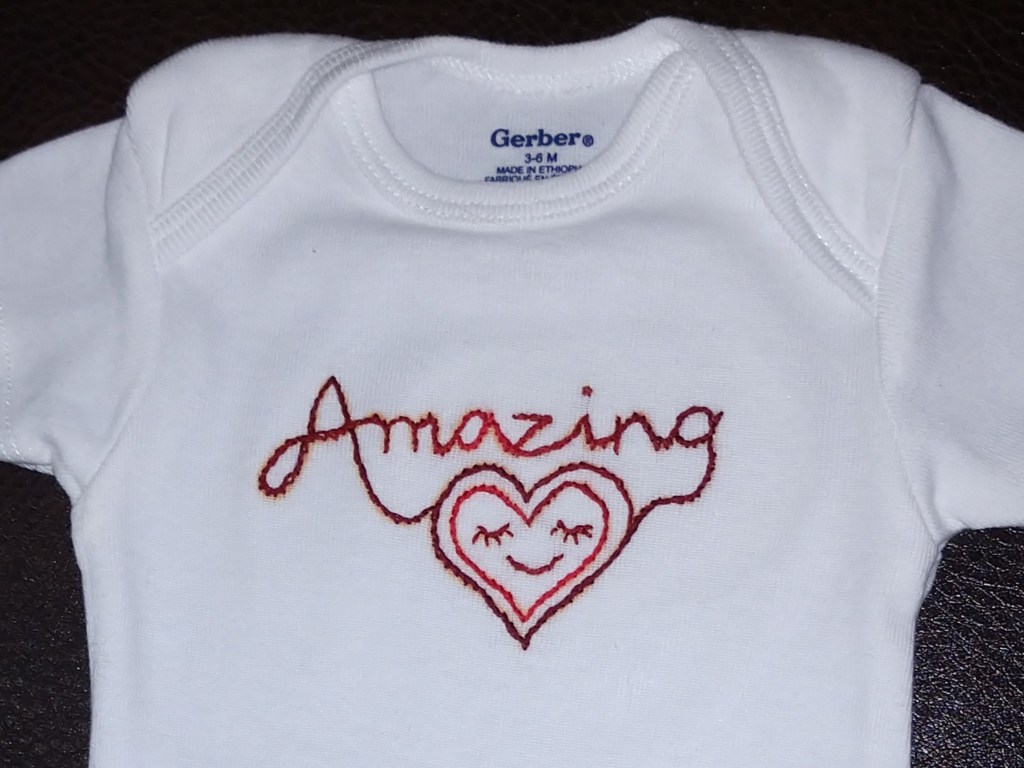
I tried out this pattern with a variegated red thread. In order to keep the changing red hues aligned well, I began below the “A” in “Amazing,” worked my way across the word, and then came back down to the heart.

Truthfully, I’m not 100% happy with the result. I think if I did this pattern again, I’d keep to a single-color thread instead of a variegated one. I don’t know… anyone else have an opinion on how this came out? Let me know!

finished embroidery pattern

Rules & Restrictions for This Free “Amazing Heart” Onesie Embroidery Pattern:

All patterns found on Crafting Shapes are fully my own designs unless specifically stated otherwise.

amazing free embroidery pattern

You are not allowed to… sell any part of this Amazing Heart pattern in part or as a whole, nor may you sell the finished creation that results from this or any other pattern on Crafting Shapes.

You are welcome to… print, duplicate, and create this project for your personal, non-commercial use. You are also welcome to give finished projects as gifts to others or donate them for free to charitable causes.

If you choose to share this free embroidery pattern online (such as on Pinterest or through your own blog), please link directly to this post to support my ability to create future free patterns for all to enjoy. (Do not copy/paste the pattern into your own blog, for example.)

“Hug Me” Teddy Bear – Baby Embroidery Pattern

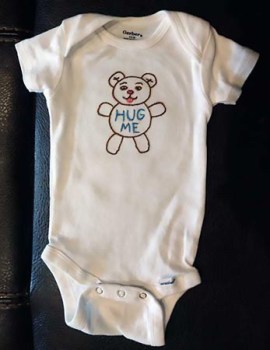
baby onesie with bear embroidery

A lot has happened since my last post. I had a baby! It’s probably no surprise, then, that I’m going to be sharing some baby-related crafts these days. Here is my first one: a free embroidery pattern that’s ideal for a baby onesie. The example shown was stitched onto a pre-made white Gerber onesie using a 4-inch embroidery hoop. The entire project took me less than one weekend to complete.

Click here to download a PDF of the “Hug Me Teddy Bear” pattern.
or
Click here to download a PDF of the pattern as a mirror image.


Tips and Techniques for Stitching Your Baby Onesie Embroidery Pattern

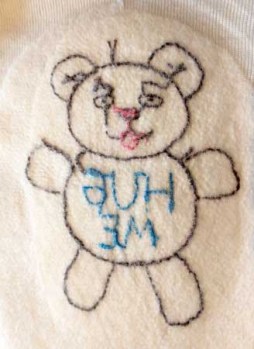
hug me bear back image

I put two layers of lightweight iron-on interfacing on the inside of the fabric – once BEFORE I start to stitch to stabilize the fabric, and then a second time AFTER I’m done stitching. The second layer of interfacing both keeps stitching in place and also ensures that the fabric won’t chafe against the skin.

With the first layer of interfacing in place, I stitched the entire pattern using stem stitch, except for the pink center of the nose, which uses satin stitch. Don’t worry about attempting any satin stitch for the eye pupils. They’re too small for that. Instead, simply do two small stitches right next to each other. That will be plenty.

I opted for stem stitch instead of back stitch for two reasons. First, I like stem stitch better for sharp curves (like around the eyes and tongue, for example). Second, and more importantly, stem stitch makes a much neater back side for the stitching. And when it comes to potential chafing against my baby’s skin, I want as little thread on the back of the fabric as possible.


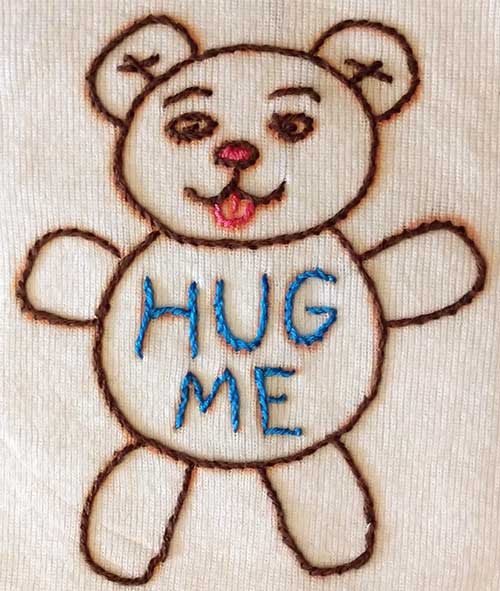
Here is a closer image of the front of the embroidery. (Please pardon the wrinkles in the fabric… I hadn’t ironed out the crease from the embroidery hoop when I took this photo.)

hug me bear front image

My color choices, as you can see in the picture, are dark brown throughout (including the stem stitch outline of the nose), medium pink for the tongue and center of the nose, and turquoise for the “Hug Me” letters.

If you try out this pattern, I’d love to know what colors you chose to use. Share a picture of your stitching in the comments!


The Rules for This Pattern…

Free embroidery pattern hug me bear

All patterns found on Crafting Shapes are fully my own designs unless specifically stated otherwise.

You are not allowed to… sell any part of this free embroidery Hug Me Teddy Bear pattern in part or as a whole, nor may you sell the finished creation that results from this or any other pattern on Crafting Shapes.

You are welcome to… print, duplicate, and create this project for your personal, non-commercial use. You are also welcome to give finished projects as gifts to others or donate them for free to charitable causes.

If you choose to share this free embroidery pattern online (such as on Pinterest or through your own blog), please link directly to this post to help support my ability to create future free patterns for all to enjoy. (Do not copy/paste the pattern into your own blog, for example.)

“Home Sweet Home” Hand Embroidery Pattern

I’ve been working on my own hand embroidery lettering lately, and this is my first attempt at a project using it. This free embroidery pattern has your traditional “Home Sweet Home” motif… always a safe go-to in my book. I’ve made the pattern available both in regular and mirror-image format.

Click here to download the regular PDF pattern.

Click here to download the PDF pattern as a mirror image.

For tips on how I transferred the pattern to fabric and then stitched each section, keep on reading!


Tip #1 – Pattern Transferring

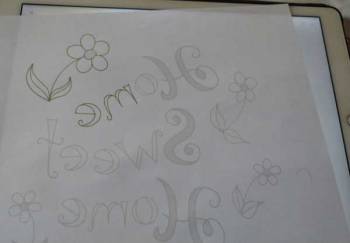
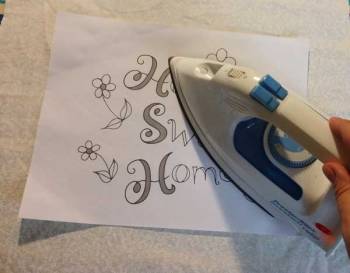
I print out the pattern and then trace the back of it using the fine-tip embroidery transfer pens from Sublime Stitching. I use my iPad as a lightbox to trace the pattern by setting up the iPad’s “Guided Access” feature to disable the touch screen. It works like a charm. Then all I need to do is iron my homemade transfer pattern to my fabric!

I’ve used these Sublime Stitching embroidery pens for numerous projects, and they work great on light-colored fabric. The only issue I’ve had with these pens is that the ink can fade over time as my hand rubs the fabric on larger projects. I solve this problem by touching up the pattern in trouble spots with a well-sharpened #2 pencil. Obviously, I’m very careful when doing this, because I don’t want to damage the fabric by pressing too hard with the pencil.

Click here to watch my more in-depth instruction video on how to transfer an embroidery pattern to fabric, if you need it.


Tip #2 – Stitching the Letters

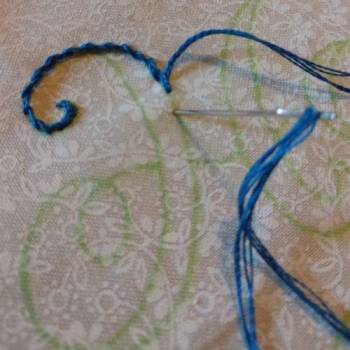
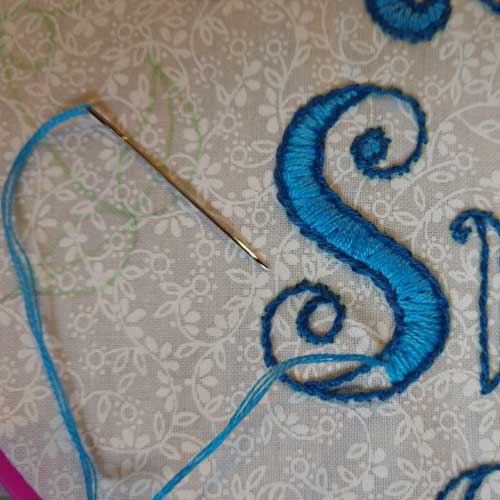
For the upper case and lower case letters alike, I began by outlining the letters with a stem stitch. I chose a deep blue for the letter outlines. Then I filled in the letters with a satin stitch in light blue.

You could also do each entire letter in the same color, but I personally like the light/dark contrast. I think it helps the letters to pop a bit more.


Tip #3 – Flower Stems & Leaves

fishbone stitch

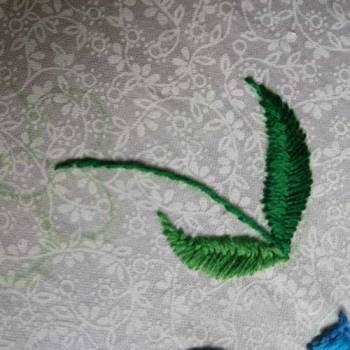
After finishing the lettering, I moved to the flowers. For each flower, I worked the stem and RIGHT leaf in the same dark green. Then I worked the LEFT leaf using a lighter shade of green.

The flower stem is worked as a stem stitch. Then I did the leaves with the fishbone stitch. To avoid making the finished project too busy-looking, I chose not to outline the leaves or flowers the way I did the letters.


Tip #4 – Flower Centers

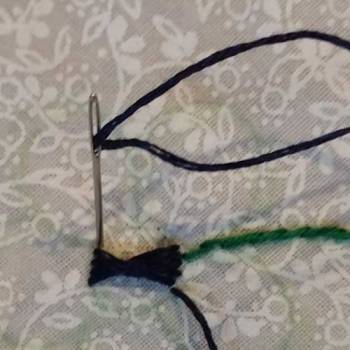
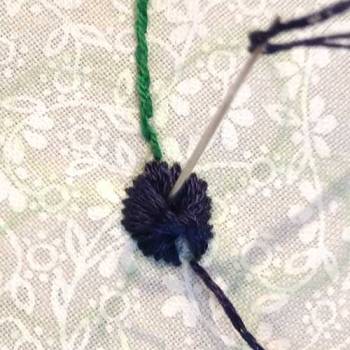
The centers of my flowers are very dark – an even darker blue than the letter outlines. I did these with my personal variation on a satin stitch. First, I worked my way around the circle by bringing the needle up at the bottom of the right side and then putting it down through the fabric at the top of the left side. (See the first picture below.) I worked around the circle this way, creating a spiral that overlaps in the center.

When the circle was completely filled in, I then inserted the needle into the CENTER of the spiral and pulled it through. This helps to anchor the overlapping threads in the center.

Now, if you don’t like my method here, you could probably work a simple satin stitch or even a buttonhole stitch to fill in the flower centers. I personally like to do it this way, because it causes the center of the flower to pop up more.


Tip #5 – Flower Petals

Finally, for the flower petals themselves, I did a long & short stitch using light pink and light purple threads. I began with the purple along the counter-clockwise side of each petal. Then I filled in the rest of the long-short stitching with pink on the clockwise side of each petal.

After that, the only thing left to do was to mount the fabric on a board and hang it up on my wall. Hooray for making my sweet home a little sweeter with a new free embroidery pattern. :)


Rules & Restrictions for This Free Embroidery Pattern:

free embroidery pattern home sweet home

All patterns found on Crafting Shapes are fully my own designs unless specifically stated otherwise.

You are not allowed to… sell any part of this free embroidery Home Sweet Home pattern in part or as a whole, nor may you sell the finished creation that results from this or any other pattern on Crafting Shapes.

You are welcome to… print, duplicate, and create this project for your personal, non-commercial use. You are also welcome to give finished projects as gifts to others or donate them for free to charitable causes.

If you choose to share this free embroidery pattern online (such as on Pinterest or through your own blog), please link directly to this post and support my ability to create future free patterns for all to enjoy. (Do not copy/paste the pattern into your own blog, for example.)