“Home Sweet Home” Hand Embroidery Pattern

I’ve been working on my own hand embroidery lettering lately, and this is my first attempt at a project using it. This free embroidery pattern has your traditional “Home Sweet Home” motif… always a safe go-to in my book. I’ve made the pattern available both in regular and mirror-image format.

Click here to download the regular PDF pattern.

Click here to download the PDF pattern as a mirror image.

For tips on how I transferred the pattern to fabric and then stitched each section, keep on reading!


Tip #1 – Pattern Transferring

I print out the pattern and then trace the back of it using the fine-tip embroidery transfer pens from Sublime Stitching. I use my iPad as a lightbox to trace the pattern by setting up the iPad’s “Guided Access” feature to disable the touch screen. It works like a charm. Then all I need to do is iron my homemade transfer pattern to my fabric!
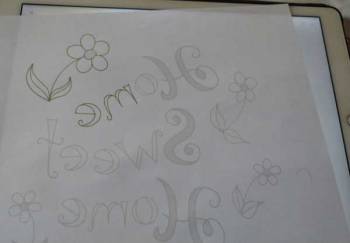
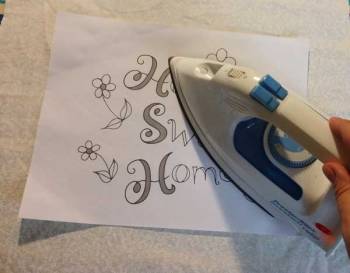
I’ve used these Sublime Stitching embroidery pens for numerous projects, and they work great on light-colored fabric. The only issue I’ve had with these pens is that the ink can fade over time as my hand rubs the fabric on larger projects. I solve this problem by touching up the pattern in trouble spots with a well-sharpened #2 pencil. Obviously, I’m very careful when doing this, because I don’t want to damage the fabric by pressing too hard with the pencil.

Click here to watch my more in-depth instruction video on how to transfer an embroidery pattern to fabric, if you need it.


Tip #2 – Stitching the Letters

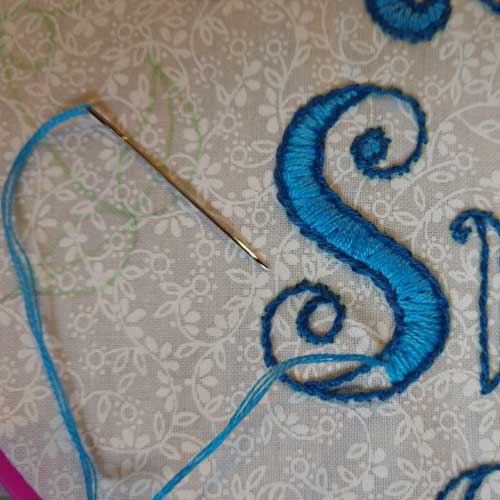
For the upper case and lower case letters alike, I began by outlining the letters with a stem stitch. I chose a deep blue for the letter outlines. Then I filled in the letters with a satin stitch in light blue.

You could also do each entire letter in the same color, but I personally like the light/dark contrast. I think it helps the letters to pop a bit more.
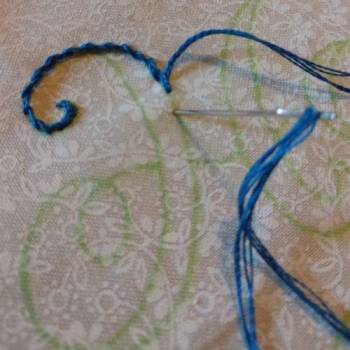

Tip #3 – Flower Stems & Leaves

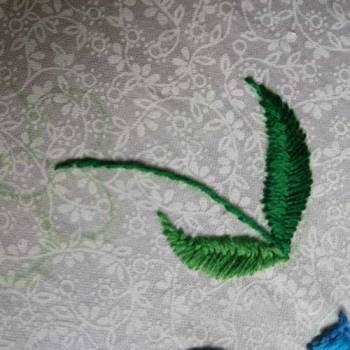
fishbone stitch

After finishing the lettering, I moved to the flowers. For each flower, I worked the stem and RIGHT leaf in the same dark green. Then I worked the LEFT leaf using a lighter shade of green.

The flower stem is worked as a stem stitch. Then I did the leaves with the fishbone stitch. To avoid making the finished project too busy-looking, I chose not to outline the leaves or flowers the way I did the letters.


Tip #4 – Flower Centers

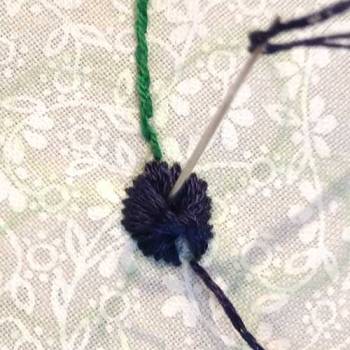
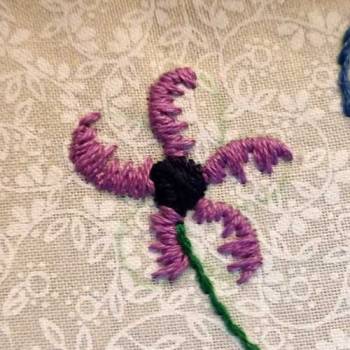
The centers of my flowers are very dark – an even darker blue than the letter outlines. I did these with my personal variation on a satin stitch. First, I worked my way around the circle by bringing the needle up at the bottom of the right side and then putting it down through the fabric at the top of the left side. (See the first picture below.) I worked around the circle this way, creating a spiral that overlaps in the center.

When the circle was completely filled in, I then inserted the needle into the CENTER of the spiral and pulled it through. This helps to anchor the overlapping threads in the center.
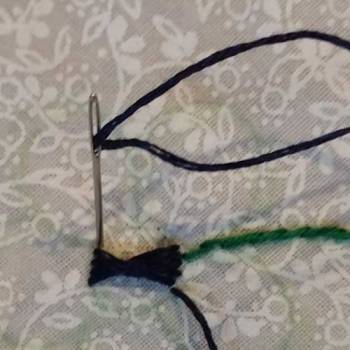
Now, if you don’t like my method here, you could probably work a simple satin stitch or even a buttonhole stitch to fill in the flower centers. I personally like to do it this way, because it causes the center of the flower to pop up more.


Tip #5 – Flower Petals

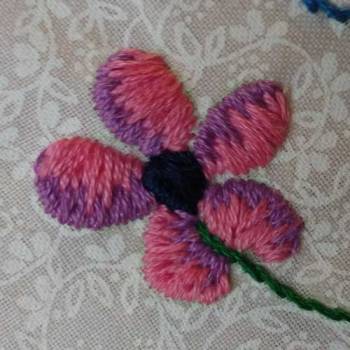
Finally, for the flower petals themselves, I did a long & short stitch using light pink and light purple threads. I began with the purple along the counter-clockwise side of each petal. Then I filled in the rest of the long-short stitching with pink on the clockwise side of each petal.
After that, the only thing left to do was to mount the fabric on a board and hang it up on my wall. Hooray for making my sweet home a little sweeter with a new free embroidery pattern. :)


Rules & Restrictions for This Free Embroidery Pattern:

free embroidery pattern home sweet home

All patterns found on Crafting Shapes are fully my own designs unless specifically stated otherwise.

You are not allowed to… sell any part of this free embroidery Home Sweet Home pattern in part or as a whole, nor may you sell the finished creation that results from this or any other pattern on Crafting Shapes.

You are welcome to… print, duplicate, and create this project for your personal, non-commercial use. You are also welcome to give finished projects as gifts to others or donate them for free to charitable causes.

If you choose to share this free embroidery pattern online (such as on Pinterest or through your own blog), please link directly to this post and support my ability to create future free patterns for all to enjoy. (Do not copy/paste the pattern into your own blog, for example.)
Crochet Doily Coaster with Rainbow Edging

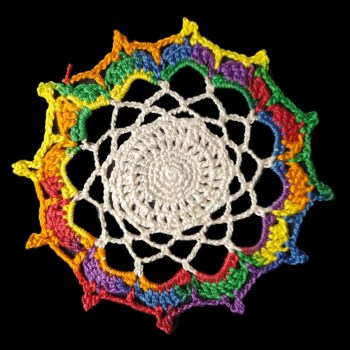
Today’s crochet pattern for a doily coaster is just a quick snippet that I churned out over the weekend. I love to play with variegated colors, since they help to showcase the individual rounds in the pattern. In this case, I kept the inside of the coaster simple and in plain off-white. After all, that’s the part that hides under the glass, right? Then I spent my energy on creating an easy but great looking, colorful border to peek out from the glass’s edge. Enjoy!

Required Materials

  • Crochet Hook – Size 9 / 1.40mm
  • Size 10 Crochet Thread in color #1 (Aunt Lydia’s brand in off white used in example)
  • Size 10 Crochet Thread in color #2 (Aunt Lydia’s brand in variegated rainbow used in example)
Rainbow doily crocheted coaster

Crochet Pattern Instructions

To start: With color #1, make a magic circle (There is a great tutorial on how to do a magic circle over at Simply Crochet’s website)

Round 1: ch 1, sc x6 into circle, sl st in 1st sc to join, tighten magic circle closed

Round 2: ch 1, (2sc in next st) x6, sl st in 1st sc [12sc total]

Round 3: ch 1, (sc in next st, 2sc in next st) x6, sl st in 1st sc [18sc total]

Round 4: ch 1, (sc in next st, sc in next st, 2sc in next st) x6, sl st in 1st sc [24sc total]

Round 5: ch 4 (counts as 1st dc and ch1), (dc in next st, ch 1) x23, sl st in 1st dc

Round 6: sl st into next ch1-sp, ch 3 (counts as 1st dc), dc in same ch1-sp, ch 1, [dc in next ch1-sp, ch 1*, 2dc in next ch1-sp, ch 1] repeat [ ] around, on last repeat stop at *, sl st in 1st dc

Round 7: sl st in next dc, sl st in next ch1-sp, ch 1, sc in same ch1-sp, sc in next ch1-sp, [ch 3, sc in next ch1-sp, sc in next ch1-sp] repeat [ ] around, ch 1, hdc in 1st sc (counts as final ch3-loop)

Round 8: ch 1, sc in same ch3-loop, [ch 5, sc in next ch3-loop] repeat [ ] around to last loop, ch 2, dc in 1st sc (counts as last ch5-loop)

Round 9: ch 1, sc in same ch5-loop, [ch 7, sc in next ch5-loop] repeat [ ] around to last loop, ch 3, tr in 1st sc (counts as last ch7-loop)

Round 10: ch 1, sc in same ch7-loop, [ch 9, sc in next ch7-loop] repeat [ ] around to last loop, ch 9, sl st in 1st sc

—CUT THREAD & TIE OFF, THEN CONTINUE TO ADD COLOR #2 FOR BORDER—

Round 11: With thread color #2, sl st to join thread in ch9-loop, ch 1, 5sc into same loop, [ch 1, 9sc in next loop] repeat [ ] x11, ch 1, 4sc into 1st loop, sl st in 1st sc

Round 12: ch 3 (counts as 1st dc), dc in same st, [dc in next st, dc in next st, ch 1, sk 2 sc, sc in next ch1-sp, sk 2 sc, ch 1, dc in next st, dc in next st*, 2dc in next st] repeat [ ] around, on last repeat stop at *, sl st in 1st dc

Round 13 (*see recommended picot instructions below): ch 1, sc in same st, [ch 1, ch3-picot, ch 1, sc in next st, ch 3, sk 3 st, dc in next sc, ch 3, sk 3 st*, sc in next st] repeat [ ] around, on last repeat stop at *, sl st in 1st sc

—CUT THREAD & TIE OFF—

Now all that is left for you to do is wet and block the coaster. I just rinse mine quickly in warm sink water, squeeze it out, and then flatten it to dry inside a folded washcloth under a heavy book. I recommend taking the time to pinch each ch3-picot into shape when you are doing this blocking.


Instructions for ch3-picot stitch in Round 13

I’ve seen picots done a few different ways. In my case, I do my ch3-picot as follows: chain 3 (ch 3), then do a single chain stitch (sc) into the first chain. This means that in Round 13 above, when you see these instructions (ch 1, ch3-picot, ch 1), you will do the following: chain 4 (ch 4), then do a single chain stitch (sc) into the SECOND chain you made, then chain 1 (ch 1).


Rules & Restrictions:

All patterns found on Crafting Shapes are fully my own designs unless specifically stated otherwise.

You are not allowed to… sell any part of this free coaster crochet pattern in part or as a whole, nor may you sell the finished creation that results from this or any other pattern on Crafting Shapes.

You are welcome to… print, duplicate, and create these projects for your personal, non-commercial use. You are also welcome to give these finished projects as gifts to others or donate them for free to charitable causes.

If you choose to share this free coaster crochet pattern online (such as on Pinterest or through your own blog), please link directly to this post to help support my ability to create future free patterns for all to enjoy. (Do not copy/paste the pattern into your own blog, for example.)
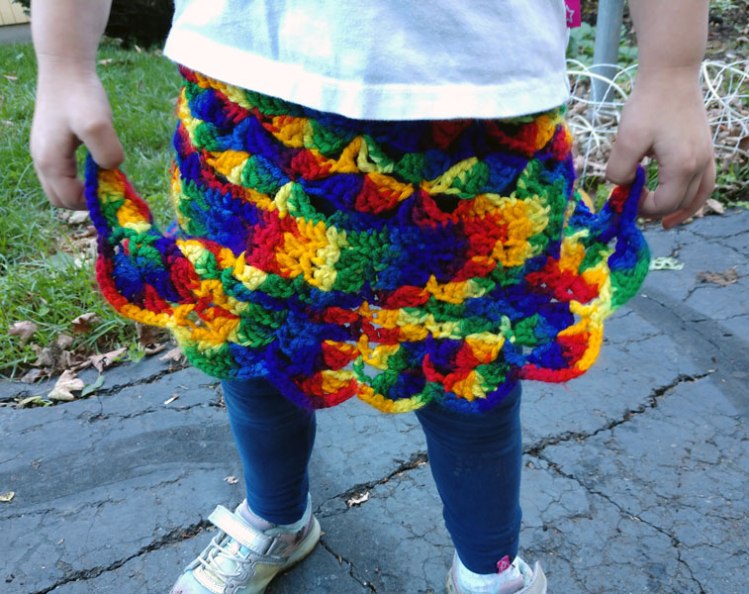
Crochet Pattern: Rainbow Skirt (Size 5T)

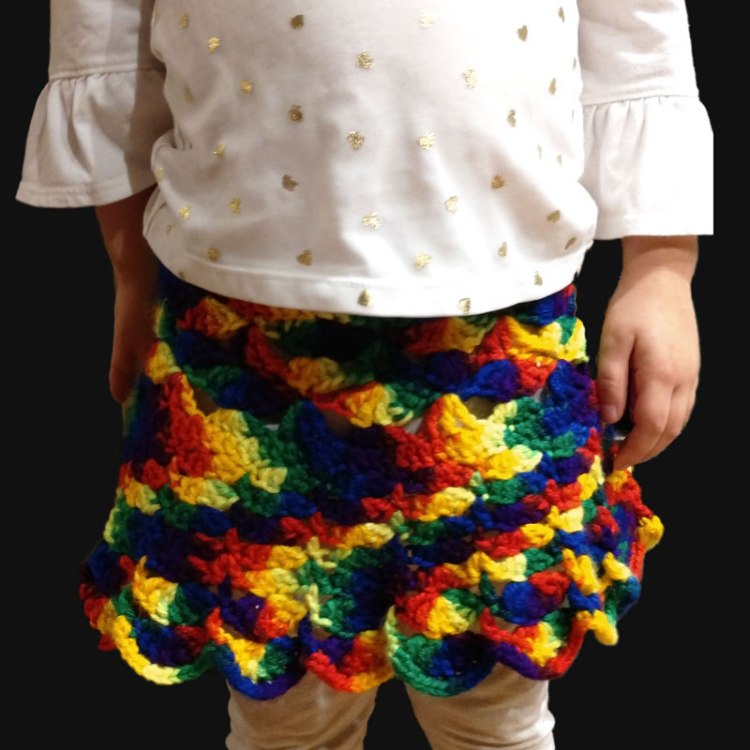
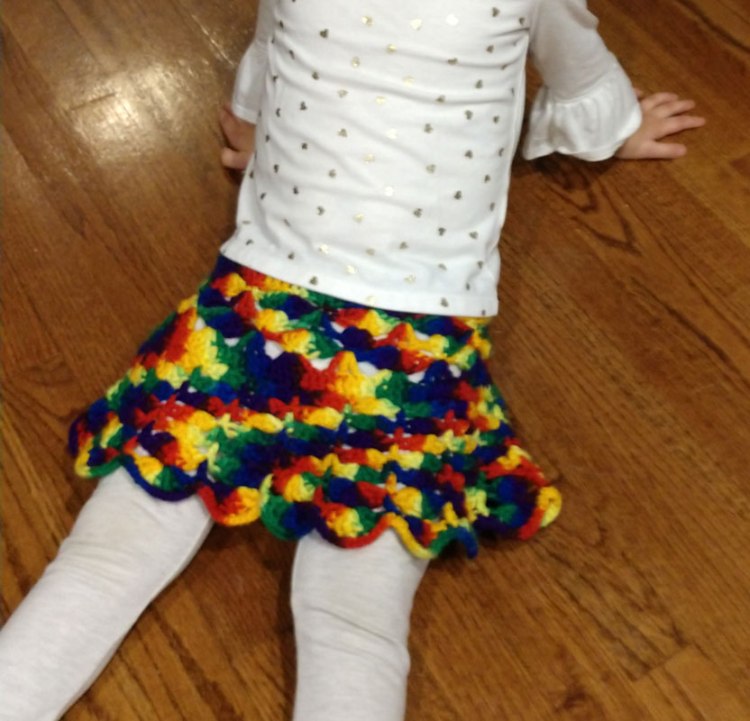
I’m going to share a free crochet pattern for a skirt I whipped out last winter at the behest of my then 3-year-old daughter. I’d bought an INSANE amount of gaudy rainbow yarn after finding it on clearance, thinking I’d make some throw pillows or a blanket or something. When my daughter saw the yarn, though, she immediately begged for a skirt. Well, why not?

This skirt ought to be worn over a pair of pants leggings, in part because of the lack of shorts/skort underside, but mainly because the pattern itself includes a lacy-like texture.


Rainbow Skirt – Size 5T – Free Crochet Pattern

Required Materials

  • 1 skein medium weight (size 4) yarn (Note: I used Red Heart Super Saver yarn for the example in the picture)
  • Crochet hook  – size H8 / 5.00mm

Crochet Pattern Instructions

SKIRT BODY:

  • To Start:  ch 80, slst into first ch to form a circle (Be careful not to twist chain when you join it)
  • Round 1:  ch 3 (counts as first dc), dc in next st x79, slst in first dc
  • Round 2:  ch 3 (counts as first dc), dc in next st x79, slst in first dc
  • Round 3:  ch 1, sc in same st, {sk 3 st, 7 tr in next st, sk 3 st*, sc in next st}, repeat from { to } 8 more times, repeat from { to * once, slst in first sc
  • Round 4:  ch 5 (counts as tr + ch1), tr in same st, ch 1, {sk 3 st, 5dc in next st, sk 3 st, ch 1*, (tr, ch1, tr, ch1, tr, ch1) in next st}, repeat from { to } 8 more times, repeat from { to * once, tr in next sc, ch 1, slst in first tr
  • Round 5:  ch 4 (counts as first tr), 3 tr in same st, {sk 5 st, sc in next st, sk 5 st*, 7 tr in next st}, repeat from { to } 8 more times, repeat from { to * once, 3 tr in same st as first tr, slst in first tr
  • Round 6:  ch 3 (counts as first dc), 2 dc in same st, {sk 3 st, ch 1, (tr, ch1, tr, ch1, tr, ch1) in next st, sk 3 st*, 5 dc in next st}, repeat from { to } 8 more times, repeat from { to * once, 2 dc in same st as first dc, slst in first dc
  • Round 7:  ch 3 (counts as first dc), dc in next st x119, slst in first dc
  • Round 8:  ch 3 (counts as first dc), 2 dc in same st, {sk 2 st, sc in next st, sk 2 st*, 5 dc in next st}, repeat from { to } around, on last repeat stop at *, then 2 dc in same st as first dc, slst in first dc (20 total shells created)
  • Round 9:  ch 3 (counts as first dc), 2 dc in same st, {sk 2 st, dc in next st, sk 2 st*, 5 dc in next st}, repeat from { to } 18 more times, repeat from { to * once, 2 dc in same st as first dc, slst in first dc
  • Rounds 10 & 11:  Repeat round 9
  • Round 12:  ch 3 (counts as first dc), 2 dc in same st, {sk 2 st, (dc, ch1, dc) in next st, sk 2 st*, 5 dc in next st}, repeat from { to } 18 more times, repeat from { to * once, 2 dc in same st as first dc, slst in first dc
  • Round 13:  ch 4 (counts as first tr), 3 tr in same st, {sk next 3 dc, dc into ch1-sp, sk next 3 dc*, 7 tr in next dc}, repeat from { to } 18 more times, repeat from { to * once, 3 tr in same st as first tr, slst in first tr
  • Round 14:  ch 4 (counts as first tr), 3 tr in same st, {sk next 3 tr, tr in next dc, sk next 3 tr*, 7 tr in next tr}, repeat from { to } 18 more times, repeat from { to * once, 3 tr in same st as first tr, slst in first tr
  • Round 15:  ch 1, 2 sc in same st as slst, {(2 sc in next st) x3, sc in next st, (2 sc in next st) x3*, 3 sc in next st}, repeat from { to } 18 more times, repeat from { to * once, sc in same st as first sc, slst in first sc

—CUT YARN & TIE OFF, THEN CONTINUE TO ADD THE WAIST—

SKIRT WAIST:

  • Round 16:  Reattach yarn with BPslst around the first dc from Round 1, ch 2 (counts as first BPhdc), FPhdc around next st, {BPhdc around next st, FPhdc around next st}, repeat from { to } around, slst in first BPhdc to join
  • Round 17:  BPslst around the same BPhdc that you just joined, ch 2 (counts as first BPhdc), FPhdc around next st, {BPhdc around next st, FPhdc around next st}, repeat from { to } around, slst in first BPhdc to join
  • Round 18:  ch 1, BPsc around the same BPhdc that you just joined, FPsc around next st, {BPsc around next st, FPsc around next st}, repeat from { to } around, slst in first BPsc to join

—CUT YARN & TIE OFF—

…And there you have it! A finished skirt for your own loved ones to enjoy. If you made this pattern, feel free to share any questions, likes, dislikes, photos of your work, etc., in the comment section below!


Rules & Restrictions:

All patterns found on Crafting Shapes are fully my own designs unless specifically stated otherwise.

You are not allowed to… sell any part of this free crochet pattern in part or as a whole, nor may you sell the finished creation that results from this or any other pattern on Crafting Shapes.

You are welcome to… print, duplicate, and create these projects for your personal, non-commercial use. You are also welcome to give these finished projects as gifts to others or donate them for free to charitable causes.

If you choose to share this free crochet pattern online (such as on Pinterest or through your own blog), please help to support me by linking directly to this post. (Do not copy/paste the pattern instructions into your own blog, for example.)